Tim Trautmann / Archive
Cart

1495 photographs, licensable by the hour or the century.

By category
A · 226 / B · 649 / C · 627
/
Clear ×
Filter

Showing results for "Heritage Preservation"
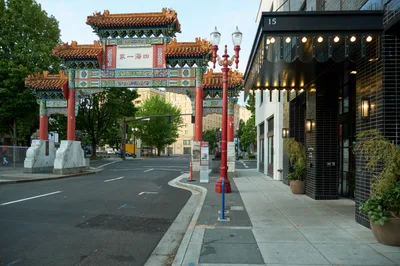
A vibrant Chinese ceremonial archway stands as the entrance to Portland's historic Chinatown district, its ornate red pillars and golden-tiled rooflines creating a striking contrast against the contemporary urban landscape. The early morning light bathes the empty street in a warm glow, while modern buildings including The Hoxton Hotel frame the traditional architecture. String lights from a nearby establishment add a gentle sparkle to the quiet intersection, capturing the seamless blend of cultural heritage and modern city life.
The ornate gateway to Portland's Chinatown creates a stunning juxtaposition of traditional Chinese architecture against the city's modern urban fabric.
Traditional Gateway Meets Modern Portland
C
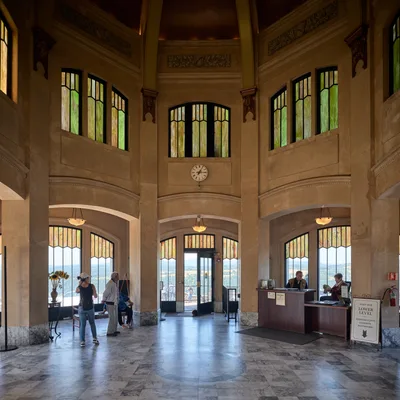
The soaring interior of Vista House reveals its 1918 architectural grandeur, with honey-toned stone walls rising to an octagonal crown adorned with stained glass windows. Visitors move quietly through the formal space, their footsteps echoing across polished marble floors as natural light filters through amber and green glass panels. An information desk anchors the ceremonial hall, while the central clock marks time beneath ornate carved details that speak to the structure's role as both scenic overlook and architectural monument.
Visitors explore the restored interior of Vista House, the iconic 1918 observatory perched above the Columbia River Gorge in Oregon.
Vista House Historic Observatory Interior
B
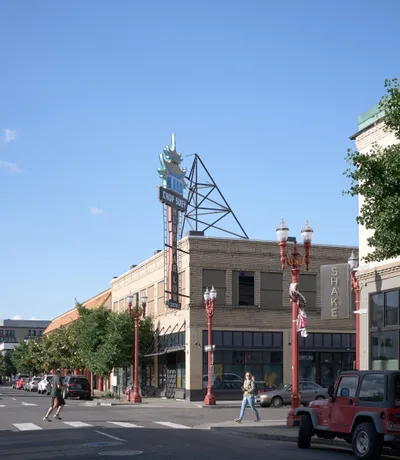
A weathered vintage Chop Suey neon sign towers above the brick storefronts of Portland's historic Chinatown district, its geometric metal framework stark against the clear blue afternoon sky. The iconic pagoda-topped sign anchors a streetscape of early 20th-century commercial buildings, where red decorative lampposts and parked vehicles line the quiet urban thoroughfare. Dappled sunlight filters through mature street trees, casting gentle shadows across the pavement and highlighting the architectural details of this culturally significant neighborhood.
The landmark Chop Suey neon sign stands sentinel over Portland's Chinatown district, where historic brick buildings and ornate street lamps preserve the area's rich cultural heritage.
Historic Chop Suey Sign Portland Chinatown
B
A vintage neon sign for "Chop Suey" rises above the historic brick buildings of Portland's Chinatown district, crowned with an ornate pagoda-style architectural element. The warm afternoon light bathes the multi-story commercial buildings while decorative red street lamps line the quiet intersection. Cars parked along the street and the clear blue sky create a peaceful urban scene that captures the enduring character of this culturally significant neighborhood.
The iconic Chop Suey neon sign stands sentinel over Portland's historic Chinatown district on a clear afternoon.
Chop Suey Neon Sign Portland Chinatown
B
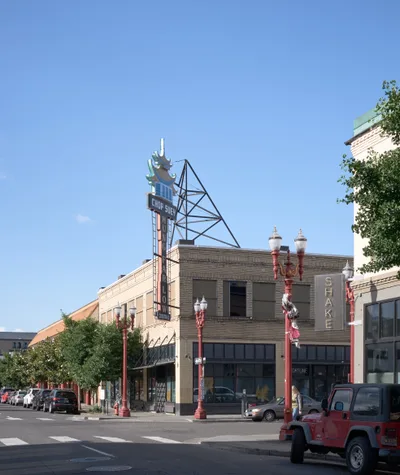
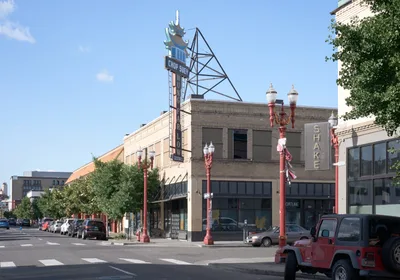
A vintage neon sign for 'Chop Suey' crowns a brick building along a tree-lined street in Portland's historic Chinatown district. The iconic pagoda-topped sign, supported by industrial scaffolding, stands as a cultural landmark against a clear blue afternoon sky. Red ornate street lamps line the avenue while parked cars and storefronts including 'Shake' create a tableau of urban heritage preservation.
The historic Chop Suey neon sign anchors a streetscape in Portland's Chinatown, blending cultural identity with contemporary urban life.
Chop Suey Neon Sign Portland Chinatown
B
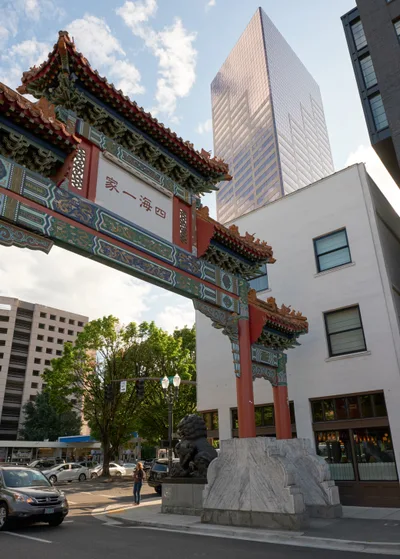
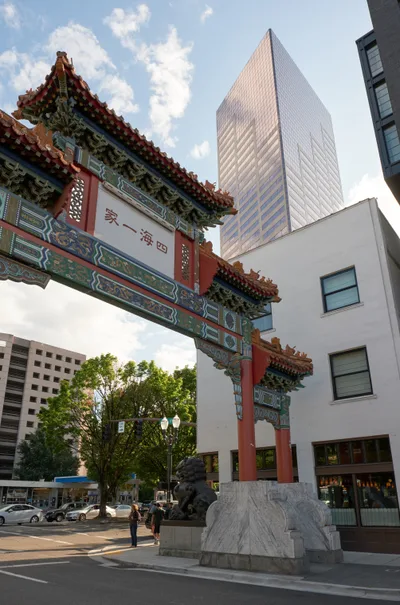
A striking architectural juxtaposition unfolds in Portland's Chinatown as an ornate Chinese ceremonial gate, adorned with vermillion lacquer and intricate dragon carvings, stands sentinel before gleaming glass towers. The traditional paifang, supported by granite guardian lions, creates a dramatic foreground against the contemporary urban backdrop of rose-tinted skyscrapers and residential buildings. Afternoon light casts gentle shadows across the busy street where pedestrians and vehicles navigate between centuries of architectural heritage.
A traditional Chinese paifang gateway frames modern high-rises in Portland's historic Chinatown district.
Traditional Gate Meets Modern Portland Skyline
B
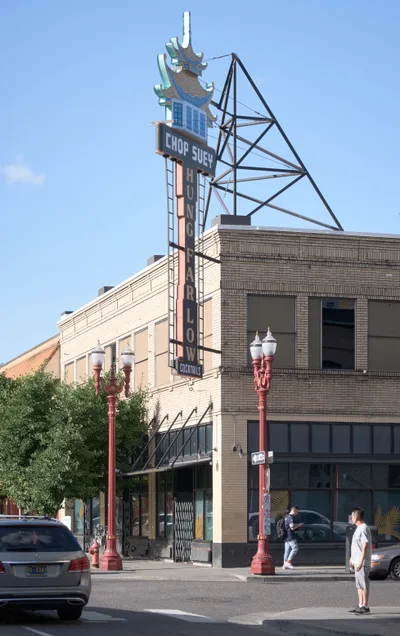
A towering vintage neon sign for the Hung Far Low restaurant dominates the streetscape in Portland's historic Chinatown district. The elaborate sign features traditional Chinese pagoda motifs and colorful neon tubing against a clear blue sky. Below, pedestrians walk along the sidewalk past the brick commercial buildings that define this culturally significant neighborhood, while period street lamps and parked cars complete the urban scene.
The iconic Hung Far Low restaurant sign stands as a landmark beacon in Portland's Chinatown district.
Vintage Neon Sign in Portland Chinatown
B
A magnificent Chinese paifang gateway stands sentinel at the entrance to Portland's Chinatown, its coral-red pillars and ornate jade-green brackets creating a striking counterpoint to the gleaming glass tower rising behind it. The traditional architecture, adorned with intricate decorative elements and Chinese characters, bridges centuries as pedestrians move beneath its ceremonial arch. Soft afternoon light bathes the scene, highlighting the cultural juxtaposition between ancient craftsmanship and contemporary urban development in this historic Pacific Northwest neighborhood.
The ornate entrance gate to Portland's Chinatown frames the contrast between traditional Chinese architecture and modern city development.
Traditional Gate Meets Modern Portland Skyline
B
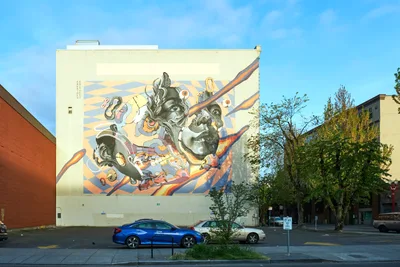
A monumental street mural dominates a white building wall in Portland's historic Chinatown district, featuring stylized portraits rendered in flowing ribbons of coral, blue, and gold against geometric patterns. The artwork depicts figures with distinctive Asian features surrounded by swirling decorative elements, creating a dreamlike narrative that bridges cultural identity and contemporary urban art. Blue and white sedans rest quietly along the tree-lined street below, while spring foliage frames the scene under an expansive blue sky dotted with wispy clouds.
A vibrant street mural celebrating cultural heritage adorns a building wall in Portland's Chinatown-Japantown Historic District.
Surreal Mural Transforms Portland Chinatown Street
C
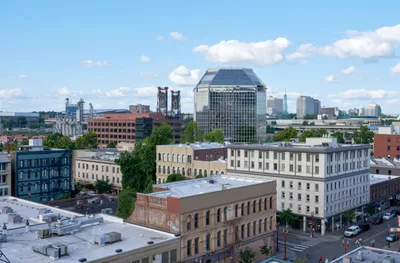
An elevated perspective captures Portland's historic Chinatown district in the foreground, where weathered brick buildings and converted warehouses create a layered urban tapestry. The distinctive glass tower of a major downtown building rises prominently in the middle distance, while the city's modern skyline stretches toward the horizon under a canvas of puffy white clouds against cerulean sky. Tree canopies punctuate the dense urban fabric, softening the architectural edges with verdant interruptions.
Historic brick buildings of Portland's Chinatown district frame the city's evolving skyline on a bright afternoon.
Portland Chinatown Historic District Skyline View
B
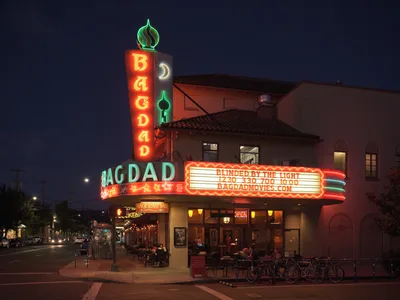
The historic Bagdad Theater & Pub radiates warmth against Portland's deepening twilight sky, its iconic vertical marquee blazing in red neon letters while the horizontal sign advertises showtimes. The Spanish Colonial Revival architecture frames the luminous entrance where patrons gather beneath the glowing canopy. Bicycles line the sidewalk and street lamps punctuate Southeast Hawthorne Boulevard, creating an intimate neighborhood cinema atmosphere in Richmond district.
The neon-lit Bagdad Theater & Pub creates a cinematic beacon along Southeast Hawthorne Boulevard in Portland's Richmond neighborhood at dusk.
Bagdad Theater Neon Glow at Dusk
A
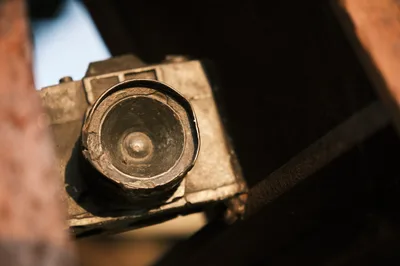
A sculptural representation of a vintage camera as part of a public art installation along Portland's Vera Katz Eastbank Esplanade. The intimate close-up reveals the circular glass element and aged metal housing of this artistic interpretation, celebrating photographic heritage through three-dimensional form. Soft shadows and golden tones create an atmosphere of reverence for this analog-inspired sculptural work displayed as public art.
A camera sculpture as part of a public art installation on Portland's Vera Katz Eastbank Esplanade, celebrating photographic heritage through artistic interpretation.
Camera Sculpture on Vera Katz Eastbank Esplanade
C
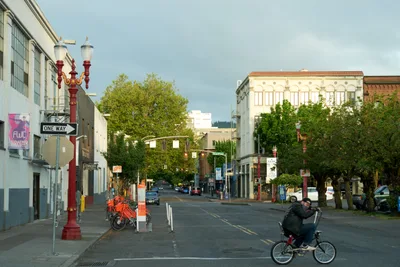
A lone cyclist navigates the quiet streets of Portland's Chinatown-Japantown Historic District as morning light settles over Northwest Everett Street. The scene captures the neighborhood's blend of heritage architecture and modern urban life, with ornate red street lamps standing against the pale morning sky. Historic storefronts line the street while a bike-share station stands ready on the left sidewalk, embodying the district's transition between its cultural past and contemporary Pacific Northwest lifestyle.
A cyclist travels through Portland's historic Chinatown district during the early morning hours, where traditional red lampposts frame the intersection of heritage and modern urban mobility.
Morning Cyclist in Portland's Historic Chinatown
C
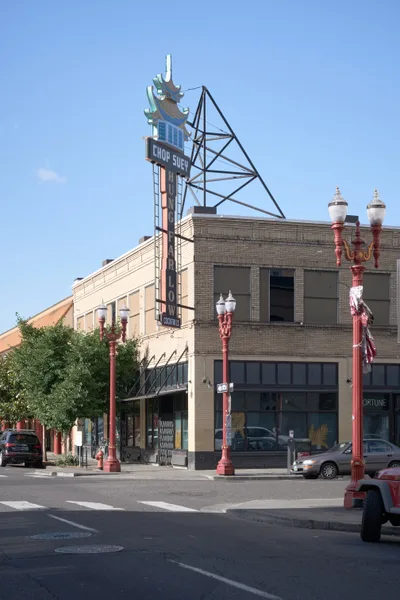
A pedestrian crosses the sun-drenched intersection in Portland's historic Chinatown district, where traditional pagoda-style signage crowns weathered brick buildings. The clear blue afternoon sky illuminates the distinctive red ornamental streetlamps and architectural details that define this cultural neighborhood. A red Jeep waits at the crosswalk as daily life unfolds along the tree-lined commercial strip, where vintage neon signs hint at the area's storied past.
Pedestrians navigate the historic intersection in Portland's Chinatown district, where traditional Asian architectural elements blend with Pacific Northwest urban landscape.
Portland Chinatown Historic District Crosswalk
B
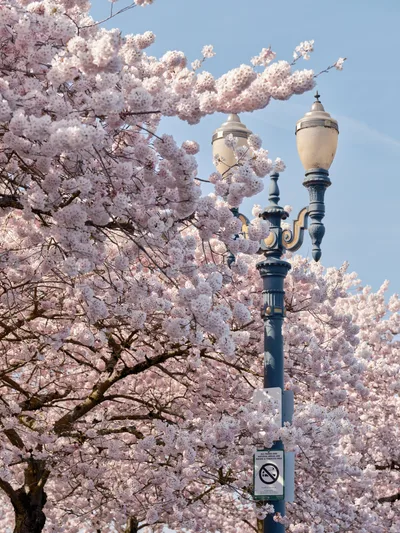
A magnificent cherry blossom tree in full bloom creates a delicate pink canopy around an ornate Victorian-style streetlamp at Tom McCall Waterfront Park in Portland's Historic Skidmore District. The pale pink petals cascade gracefully against the clear blue sky, their gossamer clusters creating an ethereal frame around the lamp's elegant cream-colored globes and decorative metalwork. The scene captures the ephemeral beauty of spring's arrival along the Willamette River, where heritage architecture meets nature's seasonal splendor.
Cherry blossoms frame a vintage streetlamp at Tom McCall Waterfront Park in Portland's Old Town district during peak spring bloom.
Victorian Streetlamp Embraced by Cherry Blossoms
A
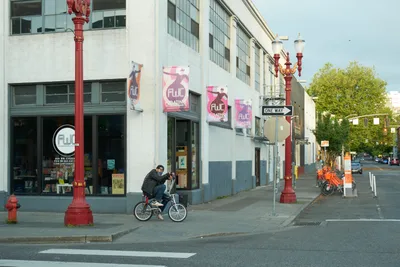
A masked cyclist navigates the quiet streets of Portland's Chinatown-Japantown Historic District during early morning hours. The scene captures the intersection of modern urban life and historic preservation, with ornate red Victorian-era street lamps standing sentinel against a backdrop of converted industrial buildings now housing creative businesses. Pink promotional banners for a local establishment flutter in the morning breeze, while the distant silhouette of downtown Portland creates depth in the soft, hazy light.
A cyclist travels through Portland's historic Chinatown district as morning light illuminates the neighborhood's distinctive red street lamps and converted warehouse architecture.
Morning Transit Through Portland's Historic Chinatown
C
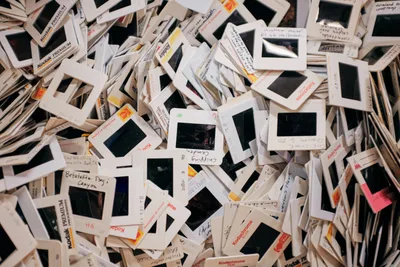
Hundreds of white-bordered film slides cascade in chaotic abundance across the frame, their dark transparent centers creating a mesmerizing pattern of light and shadow. Hand-written labels in faded ink mark forgotten moments—"Camping," "Betlehem Trip," "Canyon"—while Kodak branding peeks through the jumbled mass. The overlapping slides form an archaeological layer of analog memories, each frame holding secrets from decades past, illuminated by soft overhead lighting that transforms this collection into a nostalgic treasure trove.
A dense collection of vintage film slides with handwritten labels creates an archive of forgotten memories at SCRAP PDX in Portland, Oregon.
Scattered Archive of Vintage Film Slides
B
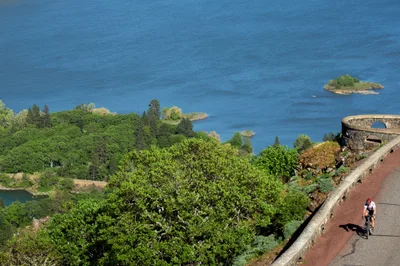
A lone cyclist ascends the weathered stone guardrail of the Historic Columbia River Highway, with the deep azure waters of the Columbia River stretching beyond verdant hillsides dotted with emerald islands. The ancient basalt overlook structure stands sentinel above Mayer State Park, while dense Pacific Northwest forest cascades down to meet the river's edge. Afternoon light illuminates the cyclist's determined climb along this legendary scenic route through the Columbia River Gorge.
A cyclist navigates the Historic Columbia River Highway above the Columbia River Gorge near Mayer State Park in Wasco County, Oregon.
Cycling the Historic Columbia River Highway
A
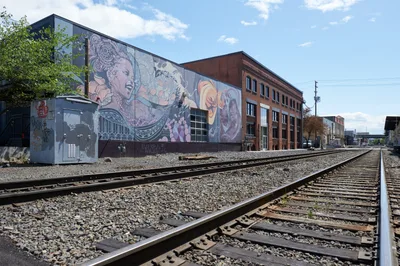
Steel railway tracks stretch into the distance through Portland's industrial Buckman neighborhood, flanked by weathered brick buildings adorned with vibrant street murals. The elaborate artwork depicts flowing figures and ornate patterns in rich purples, oranges, and earth tones, creating a striking contrast against the utilitarian infrastructure. Afternoon light illuminates the scene under a partly cloudy sky, while fresh spring foliage frames the urban tableau where transportation corridors intersect with public art.
Railway tracks cut through Southeast Portland's Buckman district, where historic brick buildings serve as canvases for elaborate murals near the King Taylor Business Center.
Rails Through Portland's Cultural Landscape
C
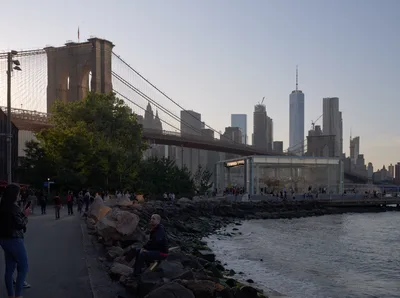
The iconic Brooklyn Bridge spans majestically across the East River as twilight settles over Lower Manhattan's gleaming skyline, including One World Trade Center. Visitors gather along the rocky shoreline of Brooklyn Bridge Park in DUMBO, some seated contemplatively on the weathered stones while others stroll the waterfront promenade. The modern glass pavilion of Jane's Carousel glows softly against the dusky sky, creating a serene juxtaposition between historic infrastructure and contemporary urban design.
Evening light bathes Brooklyn Bridge Park as visitors enjoy waterfront views of the Manhattan skyline and the historic Brooklyn Bridge.
Brooklyn Bridge Park at Golden Hour
B
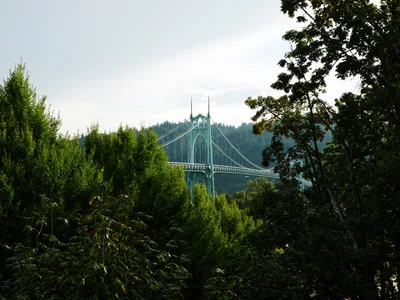
The iconic Saint Johns Bridge emerges like a Gothic cathedral through Portland's dense urban forest, its twin spires and suspension cables creating dramatic vertical lines against the overcast Pacific Northwest sky. Lush deciduous and coniferous trees frame the composition in deep emerald tones, their canopy filtering soft daylight that illuminates the bridge's pale green steel structure. The layered vegetation in the foreground creates natural depth, leading the eye from wild understory growth to the architectural marvel spanning the Willamette River gorge.
Saint Johns Bridge rises through Portland's verdant Cathedral Park neighborhood, where towering trees frame the 1931 suspension bridge's Gothic Revival towers.
Saint Johns Bridge Through Cathedral Forest
A
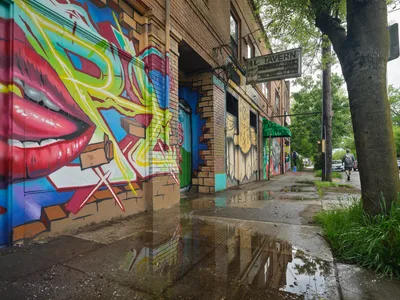
Vibrant street art transforms the brick facade of the former Oregon Theater on Southeast Division Street, where bold graffiti featuring crimson lips and electric yellow lettering creates a striking contrast against weathered brown brick. Puddles on the cracked sidewalk mirror the colorful murals while a solitary pedestrian passes beneath the canopy of mature street trees. The scene captures Portland's Richmond neighborhood where urban decay meets artistic expression, with the vintage tavern sign and rain-slicked pavement telling stories of the district's evolving character.
Street murals adorn the former Oregon Theater building on Southeast Division Street in Portland's Richmond district, their vivid colors reflected in rain puddles on the weathered sidewalk.
Rain-Soaked Murals of Richmond District
B
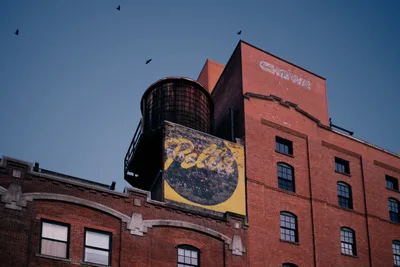
A low-angle view of the historic Chown Pella building in Portland, Oregon, photographed at dusk against a deep blue sky. The multi-story red brick industrial building features a vintage wooden water tower on its roof and a large weathered painted advertisement reading "Pella" in yellow script on a circular dark background. The faded "Chown" name is painted in ghost lettering on the upper brick facade. Several birds are silhouetted against the darkening sky above the roofline.
Retracing Gus Van Sant's footsteps. The historic Chown Pella building with its vintage water tower and painted wall advertisement in Portland, Oregon.
Ghost Signs
C
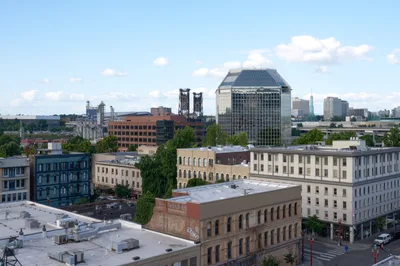
An elevated view captures Portland's urban tapestry from the Chinatown district, where historic brick buildings in the foreground contrast with the gleaming glass towers of downtown. The iconic angular skyscraper dominates the middle distance, while industrial silos and a distinctive green-domed building punctuate the skyline. Soft afternoon light bathes the scene under a partly cloudy sky, revealing the layered architecture that defines this Pacific Northwest city.
The Portland skyline rises beyond historic Chinatown buildings, showcasing the city's blend of industrial heritage and modern development.
Portland Skyline from Chinatown Perspective
B
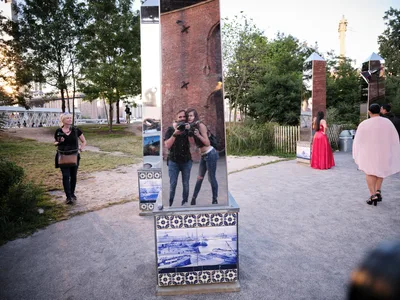
In Brooklyn's DUMBO neighborhood, visitors encounter an interactive mirror installation adorned with blue and white Portuguese-style tiles and vintage harbor photographs. A couple captures their reflection while posing with cameras, their image framed by the ornate display panel. The golden hour light filters through mature trees, casting warm shadows across the cobblestone plaza as other pedestrians, including a woman in flowing coral dress, navigate the historic waterfront district.
Tourists photograph themselves in a decorative mirror installation at Brooklyn Bridge Park in DUMBO, Brooklyn.
Mirrored Reflections in DUMBO's Historic District
A
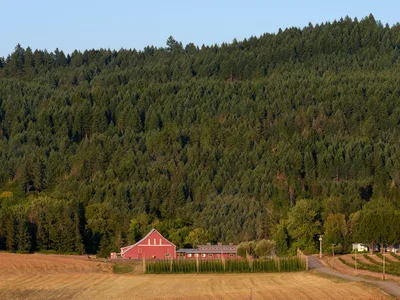
A weathered red barn with white trim stands against Carlton's forested hillsides in Oregon's Yamhill Valley. Golden late-afternoon light bathes the pastoral scene, where freshly tilled fields stretch toward dense coniferous forests that climb the rolling terrain. Hop trellises stand ready for the growing season nearby, while a country road curves past this quintessential agricultural landscape.
A classic red barn nestles beneath densely forested hills in Carlton, Oregon, where agricultural fields meet the wild beauty of the Yamhill Valley.
Historic Red Barn in Carlton's Yamhill Valley
A
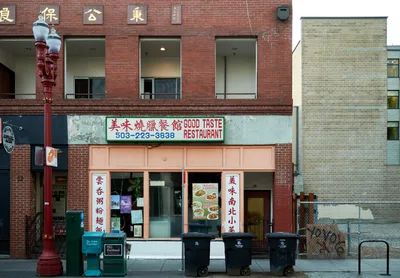
The weathered brick facade of Good Taste Restaurant anchors a corner in Portland's historic Chinatown district, its bilingual signage promising authentic Chinese cuisine beneath golden Chinese characters. Red columns frame the storefront while colorful menu displays peek through windows, creating an inviting gateway to culinary tradition. The urban streetscape reveals the intersection of heritage and commerce, where traditional ornate lamp posts stand sentinel beside modern waste receptacles on the quiet sidewalk.
Good Taste Restaurant displays bilingual signage along Northwest Everett Street in Portland's Chinatown-Japantown Historic District.
Good Taste Restaurant in Portland Chinatown
C
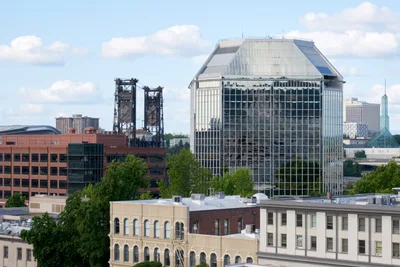
A striking glass conservatory with Victorian-inspired architecture dominates the Portland skyline, its crystalline greenhouse structure gleaming against scattered white clouds. The image captures the juxtaposition of this horticultural landmark against the industrial backdrop of the Fremont Bridge's steel towers and the modern downtown core. Historic brick buildings anchor the foreground, their weathered facades telling stories of Old Town's commercial past, while lush summer foliage softens the urban edges.
The glass conservatory stands as an architectural jewel in Portland's Old Town Chinatown district, framed by the Fremont Bridge and downtown skyline.
Portland Chinatown Glass Conservatory Architecture
B
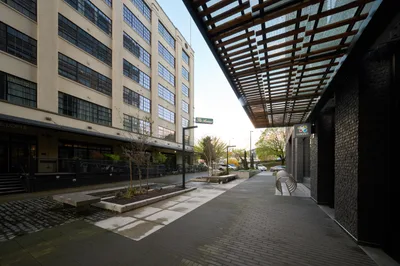
A contemporary urban courtyard in Portland's Pearl District captures the golden hour transition between converted industrial buildings. The geometric steel pergola overhead creates dramatic shadow patterns across wet brick pavers, while the restored warehouse facade with its signature grid windows anchors the composition. Warm interior lighting begins to emerge from ground-floor retail spaces as daylight fades, creating an atmospheric interplay between historic industrial architecture and modern urban renewal.
The Pearl District's signature blend of industrial heritage and contemporary urban design unfolds in this courtyard space between converted warehouse buildings at twilight.
Pearl District Industrial Courtyard at Dusk
C
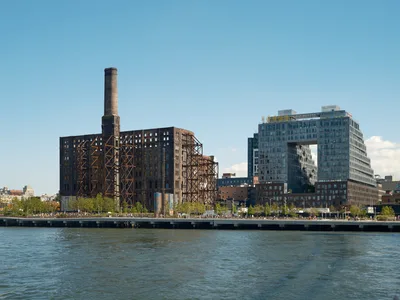
The skeletal remains of the historic Domino Sugar Factory stand sentinel against a cloudless blue sky, its weathered brick facade and exposed steel framework creating a dramatic contrast with the sleek glass towers of 325 Kent Avenue rising behind it. The East River flows in the foreground, reflecting the afternoon light as pedestrians stroll along the Williamsburg waterfront promenade. This striking juxtaposition captures Brooklyn's ongoing transformation from industrial past to contemporary urban landscape.
The preserved ruins of the Domino Sugar Factory frame modern residential towers along Brooklyn's rapidly evolving Williamsburg waterfront.
Industrial Heritage Meets Modern Brooklyn Waterfront
A

Search tags, trending this week