Tim Trautmann / Archive
Cart

804 photographs, licensable by the hour or the century.

By category
A · 82 / B · 172 / C · 549
/
Clear ×
Filter

Showing results for "Municipal Infrastructure"
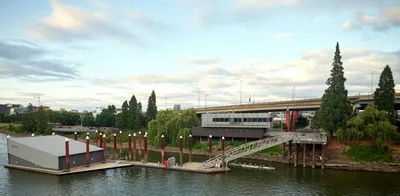
Portland Fire & Rescue Station 21 sits anchored in the Willamette River beneath the Southeast Madison Street Bridge, its modern floating structure serving the Central Eastside industrial district. The utilitarian gray building extends over dark waters on wooden pilings, connected to shore by a pedestrian gangway that spans the vegetated riverbank. Towering conifers and weeping willows frame the scene under a brooding Pacific Northwest sky, while the concrete bridge arches overhead, linking the city's urban fabric.
Portland Fire & Rescue Station 21 operates from its unique floating facility on the Willamette River at the foot of Southeast Madison Street.
Portland Fire Station 21 Floating Facility
C
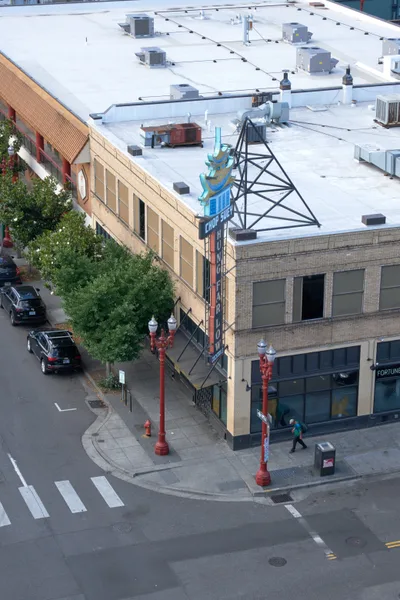
An elevated perspective captures the intersection where traditional meets contemporary in Portland's Chinatown district. The geometric precision of white crosswalk stripes guides the eye through a scene where vintage brick architecture houses modern commerce, while HVAC units dot the pristine white rooftop like mechanical sentinels. Red street lamps stand as colorful punctuation marks against the muted palette of concrete and brick, their warm hue echoing the neighborhood's cultural heritage.
Street-level commerce and rooftop infrastructure converge at a Chinatown intersection in Portland, Oregon, where traditional architectural elements meet modern urban functionality.
Urban Corner Chronicle in Portland Chinatown
B
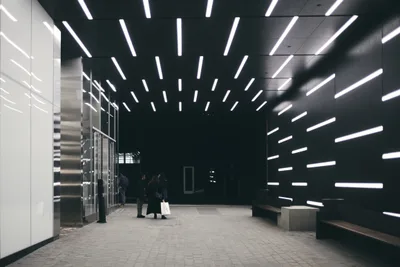
Dramatic linear LED lights pierce through the darkness of a modern transit station, creating a mesmerizing starburst pattern that radiates from a central vanishing point. Commuters move through this stark architectural space where gleaming steel elevator banks contrast against the deep shadows, their silhouettes dwarfed by the monumental scale of the underground concourse. The geometric precision of the lighting installation transforms utilitarian infrastructure into a cathedral of contemporary urban design, casting sharp white beams that slice through the cavernous darkness.
Passengers navigate beneath a striking ceiling installation of radiating LED strips in a Greenpoint transit station, where industrial architecture meets contemporary light design.
Radiant Convergence in Greenpoint Transit Hub
C
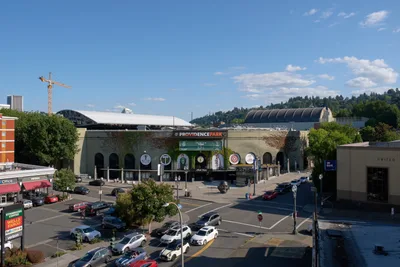
An elevated perspective captures the iconic Providence Park stadium complex in Portland's Goose Hollow neighborhood, where the massive curved venue dominates the urban landscape beneath a brilliant azure sky dotted with wispy clouds. The foreground reveals a bustling commercial intersection with parked cars arranged in neat rows, while construction cranes pierce the skyline beyond the stadium's distinctive architecture. The scene embodies the vibrant confluence of sports, commerce, and urban development in this Pacific Northwest metropolitan hub.
Providence Park stadium anchors the commercial district in Portland's Goose Hollow neighborhood, showcasing the intersection of sports entertainment and urban commerce.
Providence Park Stadium Commercial District Portland
C
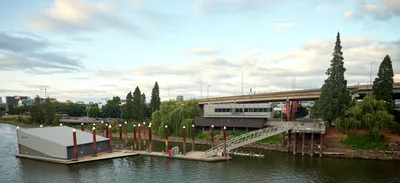
Portland Fire & Rescue Station 21 sits anchored on the Willamette River beneath the gentle light of an overcast evening sky. The modern floating firehouse, distinguished by its corrugated metal roof and red support pilings, connects to shore via a steel gangway, creating a unique waterfront emergency response facility. Towering Lombardy poplars frame the scene while the Hawthorne Bridge spans the background, establishing the station's strategic location in Portland's Central Eastside industrial district.
Portland Fire & Rescue Station 21 serves as a floating emergency response facility on the Willamette River in Oregon's largest city.
Floating Fire Station on Portland's Willamette River
C
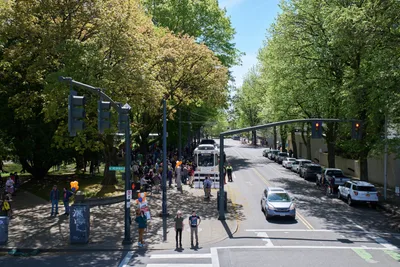
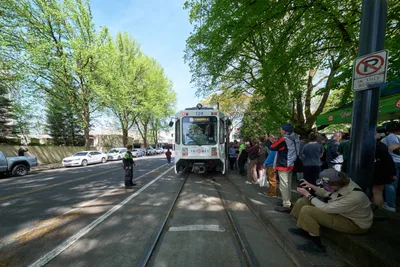
Crowds gather around a vintage white TriMet MAX Type 1 light rail car during its farewell ceremony at Holladay Park in Portland's Lloyd District. Dappled sunlight filters through mature spring foliage, casting dancing shadows across the assembled transit enthusiasts and officials in safety vests. The iconic train sits beneath traffic signals on the tree-lined street, marking the end of an era for Portland's original light rail fleet. Orange balloons and ceremonial touches add warmth to this bittersweet urban transit milestone.
Transit enthusiasts and officials celebrate the retirement of TriMet's last MAX Type 1 light rail car during a farewell ceremony at Holladay Park in Portland's Lloyd District on April 18th, 2026.
Final Farewell to MAX Type 1 Train
C
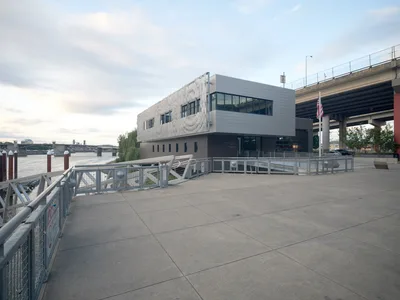
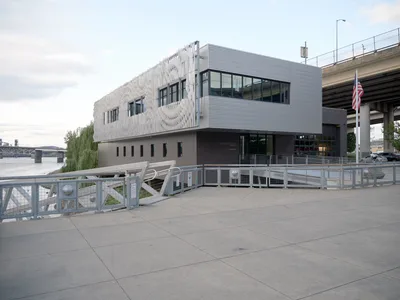
Portland Fire & Rescue Station 21 stands as a striking example of contemporary civic architecture along the Willamette River waterfront. The three-story building features a distinctive white sculptural facade contrasting with corrugated metal siding, positioned beneath the Southeast Madison Street bridge structure. Concrete walkways with metal railings frame the foreground under an overcast evening sky, while the distant river and bridge create layers of urban infrastructure.
Portland Fire & Rescue Station 21 showcases modern emergency services architecture along the Willamette River beneath the Southeast Madison Street bridge.
Portland Fire Station 21 Riverfront Architecture
C
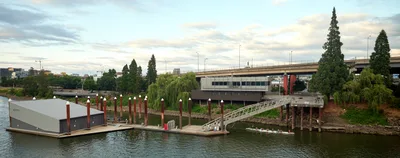
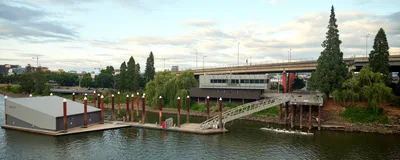
Portland Fire & Rescue Station 21 sits serenely on the Willamette River at the foot of Southeast Madison Street, its modern floating structure anchored by distinctive red pilings that march in formation toward the shore. The corrugated metal boathouse reflects the overcast Pacific Northwest sky while a white pedestrian bridge connects the water-based facility to the Central Eastside embankment. Towering evergreens and urban infrastructure frame this unique emergency response outpost, where tradition meets innovation in river rescue operations.
Portland Fire & Rescue Station 21 operates from its distinctive floating facility on the Willamette River, connected to the Central Eastside by a pedestrian bridge and secured with characteristic red moorings.
Portland Fire Station 21 Willamette River Dock
C
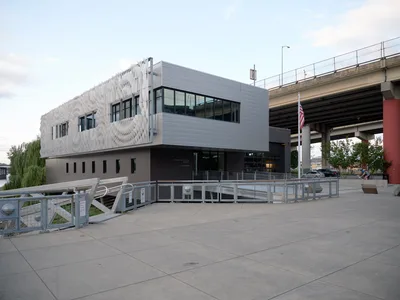
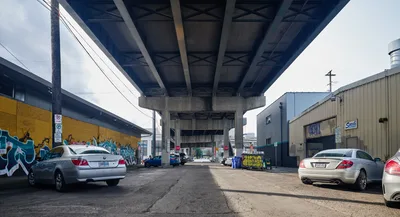
Portland Fire & Rescue Station 21 emerges as a striking example of contemporary public architecture beneath the Interstate 84 overpass in the Central Eastside district. The building's sculptural white facade features an undulating parametric pattern that contrasts dramatically with the corrugated metal upper level and industrial concrete surroundings. Captured during the golden hour transition, the structure's modern design philosophy transforms utilitarian emergency services architecture into an urban landmark that bridges infrastructure and community.
Portland Fire & Rescue Station 21 showcases innovative contemporary design with its sculptural white facade beneath Interstate 84 in the Central Eastside district.
Portland Fire Station 21 Contemporary Architecture
C
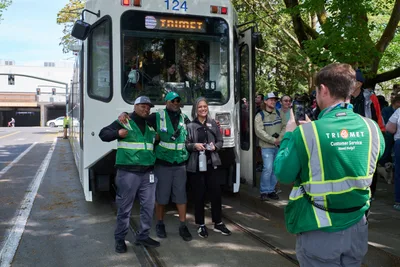
TriMet employees in vibrant green safety vests gather beside the white Type 1 MAX train numbered 124 during its retirement ceremony in Portland's Lloyd District. The scene captures a bittersweet moment as transit workers pose for commemorative photos, their camaraderie evident against the backdrop of leafy street trees and urban infrastructure. Dappled sunlight filters through the canopy, creating a nostalgic atmosphere as onlookers witness the end of an era for Portland's pioneering light rail system.
TriMet staff commemorate the retirement of Portland's original MAX Type 1 train during a farewell event at Holladay Park in the Lloyd District.
Final Farewell to Portland's First MAX Train
C
Portland Fire & Rescue Station 21 presents a striking contemporary facade beneath the evening's pewter sky, its sculptural white upper level contrasting sharply with the utilitarian concrete base. The building's distinctive undulating exterior panels create dramatic shadows while large glass windows reveal the operational spaces within. An American flag stands sentinel beside the waterfront structure, with the Willamette River and distant bridges completing this scene of municipal modernism.
Portland Fire & Rescue Station 21 showcases contemporary architectural design along the Willamette River in Portland's Central Eastside district.
Modern Fire Station Architecture Along Willamette River
C
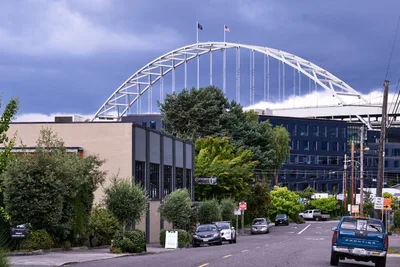
The iconic white steel arch of Portland's Fremont Bridge soars majestically against a dramatic sky of periwinkle and storm clouds, its suspension cables creating rhythmic vertical lines. Viewed from the tree-lined streets of the Slab Town neighborhood, the modernist bridge dominates the urban landscape while leafy deciduous trees and contemporary buildings frame the foreground. Two flags flutter atop the bridge's peak, while parked cars and residential streets below emphasize the human scale against this monumental infrastructure.
The Fremont Bridge's distinctive white arch spans above Northwest Portland's Slab Town neighborhood, framed by summer foliage and stormy skies.
Fremont Bridge Rises Above Northwest Portland
B
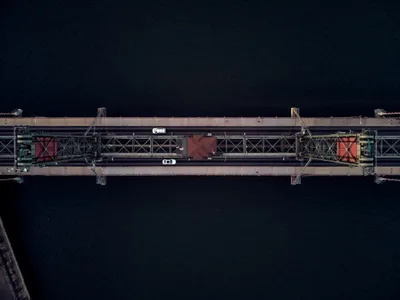
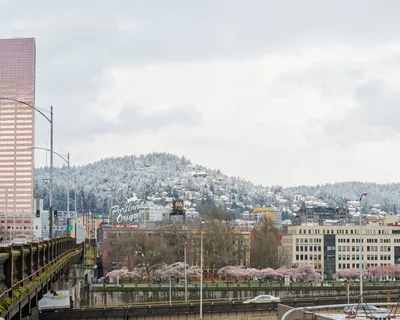
A precise aerial perspective captures Portland's historic Hawthorne Bridge spanning the dark Willamette River at dusk. The steel truss structure stretches across the frame in perfect symmetry, its weathered concrete deck illuminated by scattered streetlights while two vehicles traverse the span. The inky waters below create a stark void that emphasizes the bridge's engineered geometry and vital connection between Portland's eastside neighborhoods and downtown core.
An aerial view reveals the Hawthorne Bridge's steel truss architecture spanning the Willamette River in Portland, Oregon.
Hawthorne Bridge Suspended Over Willamette Waters
A
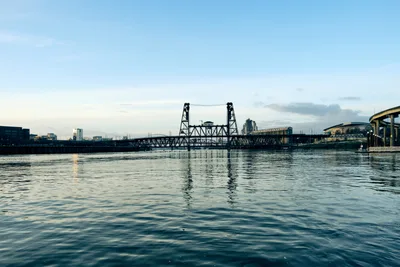
The iconic Steel Bridge spans the Willamette River in downtown Portland, its distinctive lift towers and truss structure creating dramatic silhouettes against a pale afternoon sky. The calm water mirrors the bridge's industrial framework and surrounding cityscape, while soft light catches the rippling surface. Modern buildings and infrastructure frame the scene, capturing the essence of Portland's riverfront where industrial heritage meets contemporary urban development.
Portland's Steel Bridge creates mirror-perfect reflections on the tranquil Willamette River during the afternoon.
Steel Bridge Reflections on Willamette River
C
Enthusiasts gather along Northeast 11th Avenue in Portland's Lloyd District as TriMet's white Type 1 MAX train makes its ceremonial final run on April 18th, 2026. Dappled sunlight filters through mature street trees onto the crowd of transit fans and photographers positioned along the platform and trackside, creating a nostalgic atmosphere for this historic goodbye event. The scene captures the intersection of urban transit history and community celebration, with onlookers of all ages bearing witness to the end of an era in Portland's public transportation legacy.
Transit enthusiasts document the final ceremonial run of TriMet's Type 1 MAX train during a farewell event in Portland's Lloyd District on April 18th, 2026.
Final Farewell to Portland's Original MAX Train
C
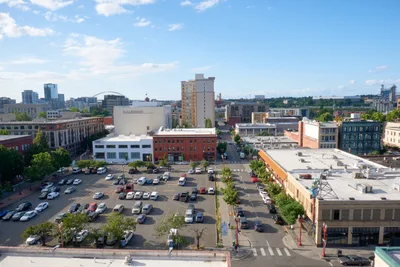
An elevated view captures the bustling intersection of Portland's historic Chinatown district, where a sun-drenched parking lot anchors the urban composition. Mid-rise buildings in varied architectural styles create a textured skyline against wispy white clouds, while the Kalberer building stands prominently among mixed-use structures. The afternoon light bathes the scene in warm tones, revealing the neighborhood's blend of residential towers, commercial buildings, and tree-lined streets that define this evolving urban landscape.
An aerial perspective showcases the dynamic urban fabric of Portland's Chinatown district, where parking infrastructure meets diverse architectural styles under a bright Pacific Northwest sky.
Portland Chinatown Urban Vista from Above
B
Portland Fire & Rescue Station 21 emerges from the Willamette River shoreline like a modernist beacon, its angular concrete form cantilevering over the water on weathered steel pilings. The facility's distinctive floating dock system extends into the jade-green current, while the Southeast Madison Street bridge spans the horizon under a brooding Pacific Northwest sky. This architectural marvel represents the intersection of urban emergency services and riverfront infrastructure, captured during the soft light of an overcast afternoon.
Portland Fire & Rescue Station 21 extends over the Willamette River with its distinctive floating dock system and modern concrete architecture.
Waterfront Fire Station Spans Willamette River
C
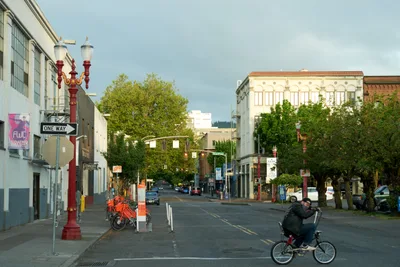
A lone cyclist navigates the quiet streets of Portland's Chinatown-Japantown Historic District as morning light settles over Northwest Everett Street. The scene captures the neighborhood's blend of heritage architecture and modern urban life, with ornate red street lamps standing against the pale morning sky. Historic storefronts line the street while a bike-share station stands ready on the left sidewalk, embodying the district's transition between its cultural past and contemporary Pacific Northwest lifestyle.
A cyclist travels through Portland's historic Chinatown district during the early morning hours, where traditional red lampposts frame the intersection of heritage and modern urban mobility.
Morning Cyclist in Portland's Historic Chinatown
C
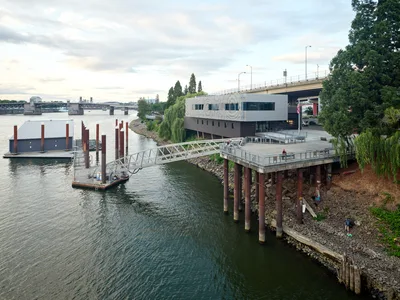
Portland Fire & Rescue Station 21 sits serenely on the Willamette River beneath soft afternoon clouds, its modern floating dock structure anchored by rust-red pilings that pierce the calm waters. The sleek gray boathouse contrasts against the verdant landscape of Central Eastside, where towering evergreens frame the Madison Bridge's concrete span. Willow trees cascade toward the riverbank while urban infrastructure creates geometric layers in the background, capturing the harmonious intersection of emergency services and Portland's natural waterways.
Portland Fire & Rescue Station 21's floating dock facility on the Willamette River provides water rescue capabilities beneath the Madison Bridge in Portland's Central Eastside district.
Portland Fire Station 21 Floating Dock
C
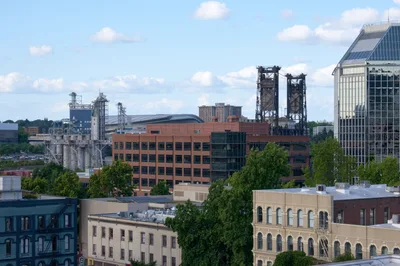
An elevated view across Portland's historic Chinatown district reveals a compelling juxtaposition of architectural eras under a partly cloudy afternoon sky. The foreground showcases traditional brick and masonry buildings with arched windows, while mid-ground industrial structures including towering grain silos and processing facilities create dramatic vertical elements. Modern glass-clad high-rises pierce the horizon, their reflective surfaces catching the natural daylight that bathes this diverse urban landscape in warm, even tones.
Mixed-era architecture defines Portland's Chinatown district, where historic brick buildings coexist with industrial infrastructure and modern skyscrapers.
Portland Chinatown Industrial Skyline Vista
B
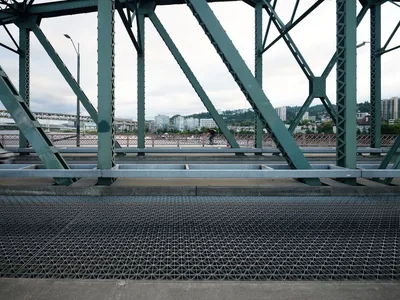
Industrial geometry frames the Portland skyline through the steel lattice work of the historic Hawthorne Bridge. Weathered green trusses create a rhythmic pattern of triangular supports, their riveted joints speaking to early 20th century engineering. Beyond the bridge's skeletal framework, modern residential towers rise against forested hills under an overcast Pacific Northwest sky, while the textured metal grating beneath adds tactile depth to this architectural intersection of past and present.
The iconic steel trusses of Portland's Hawthorne Bridge frame the city's evolving skyline across the Willamette River.
Steel Lattice Through Hawthorne Bridge Span
B
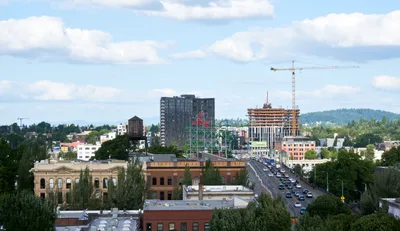
An elevated cityscape view captures Portland's Chinatown district where historic brick buildings meet contemporary high-rise construction. Tower cranes punctuate the skyline as new development rises alongside the ornate classical facade of a heritage building in the foreground. The Burnside Bridge carries steady traffic through the urban corridor, while forested hills provide a verdant backdrop to this evolving neighborhood where preservation and progress intersect.
Construction cranes tower over Portland's Chinatown as new high-rise development transforms the historic district beneath partly cloudy Pacific Northwest skies.
Portland Chinatown Development and Historic Architecture
B
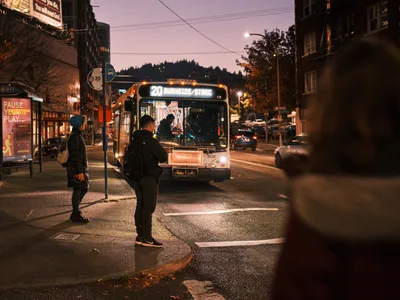
In the dusky twilight of Portland's Northwest District, passengers wait at a TriMet bus stop as the Route 20 Burnside/Stark line approaches. The amber glow of street lights mingles with the bus's bright headlights, casting warm pools of illumination across the wet asphalt of West Burnside Street. Two silhouetted figures in winter clothing stand patiently on the sidewalk, embodying the quiet rhythm of urban evening commutes against the backdrop of Portland's characteristic mixed-use architecture and forested hills.
Commuters await the Route 20 TriMet bus during evening hours on West Burnside Street in Portland's Northwest District.
Evening Transit on West Burnside Street
A
A weathered utility pole on Southeast Division Street serves as an urban canvas, its surface layered with the ghostly remnants of countless promotional posters. The textured bark of accumulated paper and adhesive creates an archaeological record of neighborhood commerce, while a public transit bus and red brick buildings frame this intersection of transient advertising and permanent infrastructure. Sharp afternoon shadows cast dramatic lines across the concrete sidewalk, emphasizing the temporal nature of street-level marketing in Portland's Richmond district.
Layers of promotional poster remnants transform a Division Street utility pole into an inadvertent archive of neighborhood advertising history.
Palimpsest of Portland Street Promotions
C
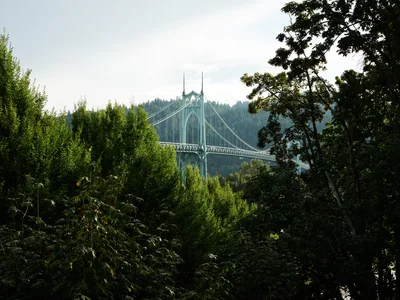
Three contemplative figures stand beneath the soaring Gothic arches of Portland's St. Johns Bridge, their silhouettes dwarfed by the weathered concrete pillars that frame Cathedral Park's verdant landscape. Afternoon light filters through the cathedral-like structure, casting gentle shadows across manicured lawns while the forested West Hills rise in the distance. The composition draws the eye through successive arches toward the Willamette River beyond, where a graceful weeping willow anchors the middle ground.
Visitors gather under the iconic Gothic arches of St. Johns Bridge at Cathedral Park in North Portland, Oregon.
Gothic Arches Frame Portland's Cathedral Park
A
The sun rises behind palm trees in Portland's Chinatown-Japantown Historic District, casting warm light across Northwest Everett Street. Ornate red street lamps stand sentinel over empty sidewalks and parked cars, while mid-century buildings frame the scene. A circular stone planter anchors the foreground as the industrial skyline dissolves into the hazy morning atmosphere.
Morning light illuminates the quiet streets of Portland's historic Chinatown district along Northwest Everett Street.
Dawn Light in Portland's Historic Chinatown
C
Community members gather around a retiring TriMet Type 1 MAX train in Portland's Lloyd District, transforming its white exterior into a canvas of handwritten messages and memories. Passengers peer through windows while dozens of people of all ages write personal tributes on the train's surface, creating an impromptu memorial to decades of public transit service. The scene captures both celebration and nostalgia as Portland bids farewell to its original light rail fleet on a bright spring afternoon.
Portland residents write farewell messages on a retiring TriMet MAX Type 1 train during a community goodbye event in the Lloyd District on April 18th, 2026.
Final Farewell to Portland's First MAX Train
C
An elevated perspective captures Portland's historic Chinatown district in the foreground, where weathered brick buildings and converted warehouses create a layered urban tapestry. The distinctive glass tower of a major downtown building rises prominently in the middle distance, while the city's modern skyline stretches toward the horizon under a canvas of puffy white clouds against cerulean sky. Tree canopies punctuate the dense urban fabric, softening the architectural edges with verdant interruptions.
Historic brick buildings of Portland's Chinatown district frame the city's evolving skyline on a bright afternoon.
Portland Chinatown Historic District Skyline View
B
A solitary figure carries garbage bags across Northwest Everett Street in Portland's Chinatown-Japantown Historic District during the early morning hours. The soft dawn light filters through fan palms and illuminates ornate street lamps, while industrial structures and modern buildings create a layered urban backdrop. The scene captures the intersection of daily labor and historic neighborhood character, with the person silhouetted against the gentle, hazy sky that blankets this corner of Old Town Portland.
A worker traverses Northwest Everett Street in Portland's historic Chinatown district as morning light bathes the palm-lined streetscape.
Morning Commute Through Portland's Historic Chinatown
C
An elevated view captures Portland's historic Chinatown district on a bright afternoon, where brick facades and contemporary structures create an eclectic urban tapestry. The bustling street scene unfolds below with diagonal parking lots filled with vehicles, tree-lined sidewalks, and pedestrians navigating the intersection of heritage and modern commerce. Puffy white clouds drift across azure skies above this Northwest Portland neighborhood, while the distinctive architecture tells the story of cultural evolution in the Pacific Northwest.
An aerial view reveals the architectural diversity and urban vitality of Portland's Chinatown district beneath a brilliant afternoon sky.
Chinatown Portland Aerial Perspective
B

Search tags, trending this week