Tim Trautmann / Archive
Cart

983 photographs, licensable by the hour or the century.

By category
A · 121 / B · 299 / C · 569
/
Clear ×
Filter

Showing results for "Two Story Building"
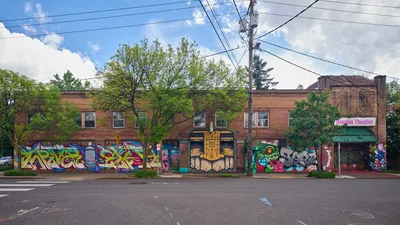
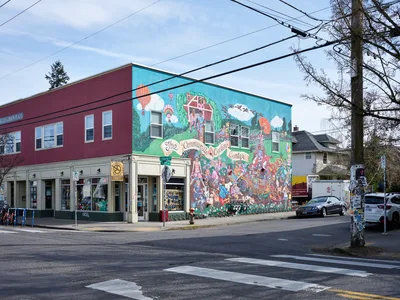
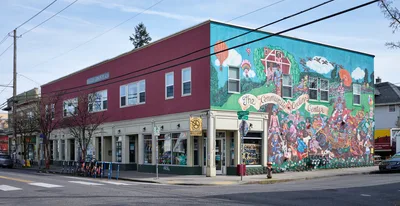
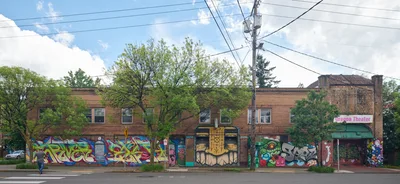
Vibrant street murals sprawl across the brick facade of the former Oregon Theater building on Southeast Division Street in Portland's Richmond neighborhood. The collaborative artwork, featuring bold geometric patterns, character portraits, and stylized lettering, creates a kaleidoscope of color against the weathered red brick under a dramatic cloudy sky. Power lines crisscross overhead while mature trees frame the scene, capturing the intersection of urban art and neighborhood history in this gentrifying corridor.
Community-sponsored murals adorn the former Oregon Theater site on Southeast Division Street, transforming the historic brick building into a canvas for local street artists.
Oregon Theater Murals Transform Division Street
B
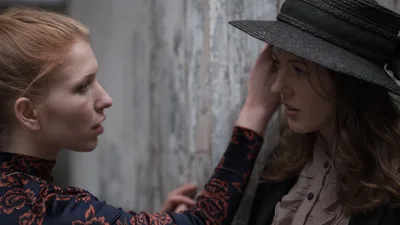
A close, intimate portrait of two women facing each other against a weathered concrete wall. Faith Yakovleva, seen in profile on the left, wears a dark floral top with red and black flowers and has her strawberry blonde hair pulled back. She reaches out to gently touch the brim of a wide black straw hat worn by Rhianna Atwood, who stands against the wall on the right in a cream ruffled blouse, her eyes downcast.
Faith Yakovleva and Rhianna Atwood in a photo editorial.
Photo Editorial
A
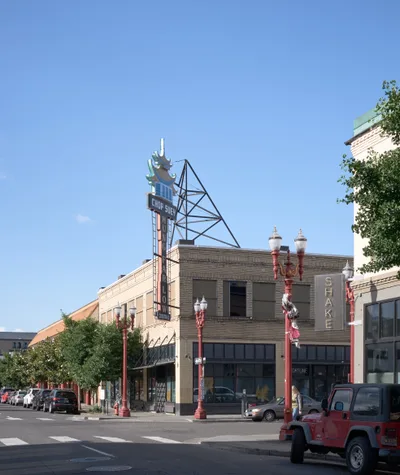
A weathered vintage Chop Suey neon sign towers above the brick storefronts of Portland's historic Chinatown district, its geometric metal framework stark against the clear blue afternoon sky. The iconic pagoda-topped sign anchors a streetscape of early 20th-century commercial buildings, where red decorative lampposts and parked vehicles line the quiet urban thoroughfare. Dappled sunlight filters through mature street trees, casting gentle shadows across the pavement and highlighting the architectural details of this culturally significant neighborhood.
The landmark Chop Suey neon sign stands sentinel over Portland's Chinatown district, where historic brick buildings and ornate street lamps preserve the area's rich cultural heritage.
Historic Chop Suey Sign Portland Chinatown
B
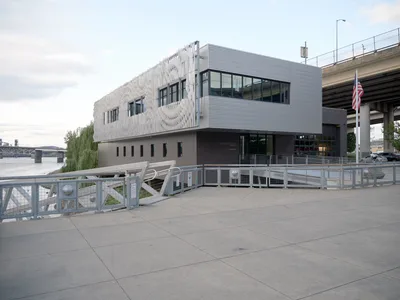
Portland Fire & Rescue Station 21 presents a striking contemporary facade beneath the evening's pewter sky, its sculptural white upper level contrasting sharply with the utilitarian concrete base. The building's distinctive undulating exterior panels create dramatic shadows while large glass windows reveal the operational spaces within. An American flag stands sentinel beside the waterfront structure, with the Willamette River and distant bridges completing this scene of municipal modernism.
Portland Fire & Rescue Station 21 showcases contemporary architectural design along the Willamette River in Portland's Central Eastside district.
Modern Fire Station Architecture Along Willamette River
C
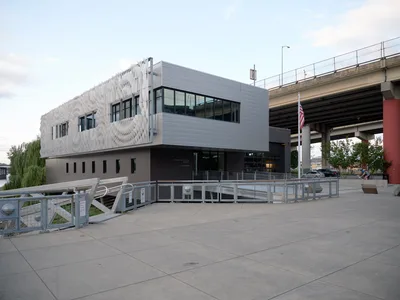
Portland Fire & Rescue Station 21 emerges as a striking example of contemporary public architecture beneath the Interstate 84 overpass in the Central Eastside district. The building's sculptural white facade features an undulating parametric pattern that contrasts dramatically with the corrugated metal upper level and industrial concrete surroundings. Captured during the golden hour transition, the structure's modern design philosophy transforms utilitarian emergency services architecture into an urban landmark that bridges infrastructure and community.
Portland Fire & Rescue Station 21 showcases innovative contemporary design with its sculptural white facade beneath Interstate 84 in the Central Eastside district.
Portland Fire Station 21 Contemporary Architecture
C
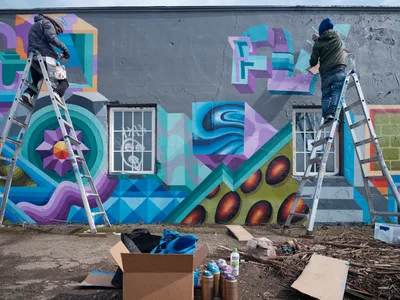
Vibrant murals cascade across the brick facade of the former Oregon Theater building on Southeast Division Street in Portland's Richmond neighborhood. The colorful street art, featuring bold graffiti-style lettering, masked figures, and abstract designs, transforms this historic two-story commercial structure into a living canvas. A lone pedestrian crosses the quiet street under overcast spring skies, while power lines create geometric patterns against the cloudy backdrop. The murals, sponsored by the Portland Street Art Alliance, breathe new life into this cultural landmark along one of the city's most dynamic corridors.
Street murals cover the former Oregon Theater building on Southeast Division Street in Portland, transforming the historic brick structure into a vibrant community art installation.
Street Art Transforms Historic Oregon Theater Site
B
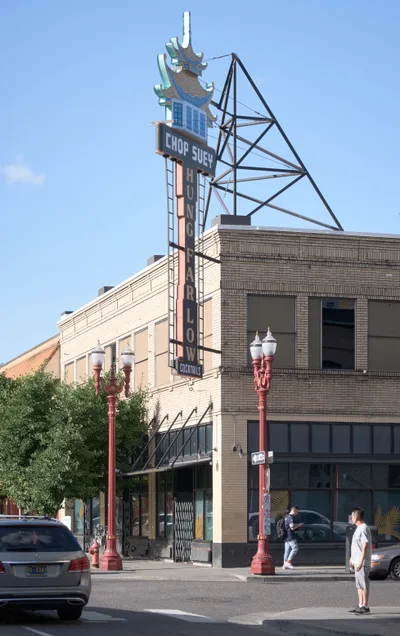
A towering vintage neon sign for the Hung Far Low restaurant dominates the streetscape in Portland's historic Chinatown district. The elaborate sign features traditional Chinese pagoda motifs and colorful neon tubing against a clear blue sky. Below, pedestrians walk along the sidewalk past the brick commercial buildings that define this culturally significant neighborhood, while period street lamps and parked cars complete the urban scene.
The iconic Hung Far Low restaurant sign stands as a landmark beacon in Portland's Chinatown district.
Vintage Neon Sign in Portland Chinatown
B
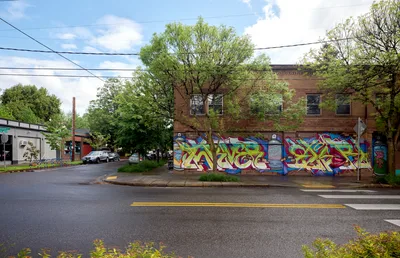
Vibrant graffiti-style murals cascade across the brick facade of a two-story building on Southeast Division Street, marking the former site of Portland's Oregon Theater. The kaleidoscopic artwork, featuring bold yellows, blues, and reds in dynamic letterforms, breathes new life into the Richmond neighborhood streetscape. Mature trees frame the scene under a partly cloudy spring sky, while power lines stretch overhead and modest commercial buildings anchor the quiet residential street.
Colorful murals sponsored by the Portland Street Art Alliance adorn the former Oregon Theater site on Southeast Division Street in Portland's Richmond neighborhood.
Street Art Transforms Historic Oregon Theater Site
B
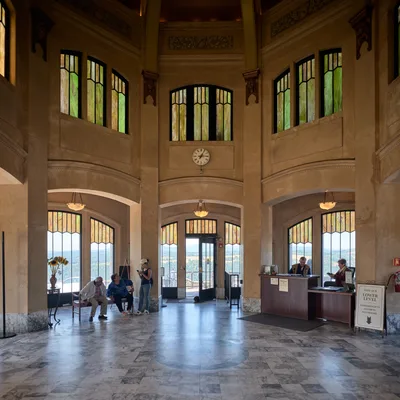
The grand interior of Vista House at Crown Point reveals its majestic Art Nouveau architecture, with soaring limestone walls and distinctive stained glass windows filtering golden afternoon light. Visitors gather beneath the ornate two-story rotunda, some seated on benches while others explore the information desk, creating an intimate human scale against the monument's imposing classical proportions. The polished marble floors reflect the warm illumination streaming through the geometric leaded glass panels, while a vintage clock marks time in this beloved Oregon landmark overlooking the Columbia River Gorge.
Visitors explore the ornate interior of Vista House, the iconic 1918 observatory perched at Crown Point in the Columbia River Gorge.
Vista House Historic Observatory Interior
B
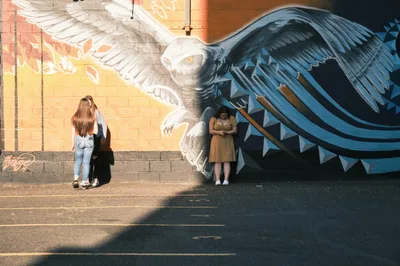
Against the Pearl District's vibrant street art, three figures maintain natural distances along a sun-dappled sidewalk, unknowingly embodying social distancing before the concept entered our collective consciousness. A magnificent owl mural with outstretched wings dominates the brick wall, its piercing gaze overseeing the scene as golden hour light bathes the urban canvas. Two women stand apart examining the artwork while a third figure retreats into shadow, creating an unintentional tableau of personal space and solitary contemplation.
Visitors naturally space themselves while admiring street art in Portland's Pearl District, inadvertently practicing social distancing in this pre-pandemic scene.
Solitary Figures Beneath Portland's Watchful Wings
A
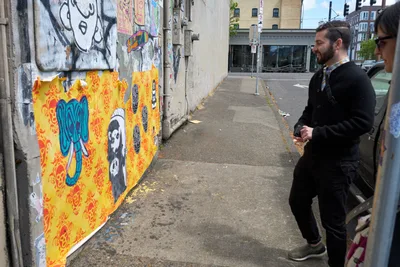
Tomás Valladares of the Portland Street Art Alliance guides participants through the vibrant wheat paste murals adorning concrete walls along Southeast Yamhill Street. Two men examine the layered urban artwork featuring bold yellow damask patterns, blue elephant imagery, and monochromatic character studies that transform the industrial corridor. The overcast Pacific Northwest light creates a muted atmosphere as the group moves through this celebrated gallery of sanctioned street art in Portland's evolving Central Eastside district.
Tour guide Tomás Valladares shows participants wheat paste street art during a Portland Street Art Alliance walking tour in the Central Eastside district.
Street Art Discovery in Portland's Central Eastside
C

Search tags, trending this week